Showing posts with label diversity. Show all posts

Wednesday, April 29, 2009

Bad fish

Fish can be bad if you're a fan of biodiversity in lakes. Or at least it's bad to have fish in every lake.

Scientists have found that we're killing biodiversity with our love for fish and our penchant for plunking fish in every lake, pond, puddle, or stream. In Maine, for example, scientists believe that only about 50 lakes are fishless out of about 6,000 lakes.

What happens when we add fish? Various amphibians and invertebrates get eaten up and vanish. Swing by the Journal of the North American Benthological Society if you want to read more.

Wednesday, March 14, 2007

Stunning new ocean discoveries

Craig Venter's excellent adventure has now produced results, and it's looking like a modern version of Charles Darwin's 19th century voyage aboard the HMS Beagle.

Using the new lens of genomics, the team's fabulous finds including doubling the number of known genes, along with mind-blowing potential for new energy sources and drugs. This is like inventing a new microscope and finding--surprise--lots of amazing new stuff we couldn't see before.

Overturning the view of open oceans as sterile and uninteresting, the study found a vast diversity of new bacteria and other microbes. The world of the wet, salty, and very small turns out to be where the action is in our oceans.

Perhaps most exciting, said study leader J. Craig Venter, is that the rate of discovery of new genes and proteins was as great at the end of the voyage as it was at the start, suggesting that humanity is nowhere close to closing the logbooks on global biodiversity.

"Instead of being at the end of discovery, it means we're in the earliest stages," said Venter, chairman of the J. Craig Venter Institute, a nonprofit gene research center.


My mind is boggled, my jaw has dropped and I've got a big bruise from being struck by awe. New ways of looking almost always produce new things found, but this is unbelievable.

So what do you see in the blue ocean pictured above? If you look right, you can see amazing intricate ecosystems of microbes with striking adaptations to the diverse microhabitats present. No longer is it just a clear blue ocean.

Thursday, November 09, 2006

Ocean uses undermined by loss of biodiversity

Oceans how do I rely on thee?--Let me count the ways. And almost all of them unravel when we overuse our oceans.
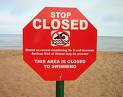
When we overfish, damage habitat, and pollute, we muck up the ocean systems that give us food, clean water, and oxygen. Yikes. In technical terms: the loss of ocean biodiversity undermines valuable ocean ecosystem services that humans rely on.

What's at risk? Clean water, safe beaches, and edible shellfish. What can happen instead? Toxic algae blooms, dead zones, fish kills and unwelcome invasive species.

This is the neglected message from the recent paper by Boris Worm and his colleagues that was more widely noted for it's projection of "the end of seafood" by 2048 if we don't stop abusing our oceans.

So the costs of ocean misuse run deeper than the loss of fish.

The good news? It's not too late. Ocean ecosystem services were restored by protected areas and fishery closures that restored biodiversity, based on 48 examples.

This is kind of a "duh." The risk is obvious when we blithely take parts out of ocean ecosystems and expect them to keep working. We wouldn't randomly take parts out of our car and expect it to keep driving it.