Showing posts with label dead zone. Show all posts

Tuesday, September 28, 2010

Seattle area dead zone

It's back, dead fish floating on the ocean's surface near Seattle. It's the Hood Canal dead zone, in a place that was once an ocean wonderland.

My father used to scuba dive in Hood Canal when he was young, and he raved about the fantastic ocean scenes. Giant octopus, plentiful fish, etc.

But now, Hood Canal has a dead zone every year, and this year could be worse than ever. It's partly natural, but humans have made it worse. This deep fjord tends to collect water like a bathtub, and algae blooms suck up oxygen when the algae die and decay. Nitrogen fertilizer from people's lawns and septic tanks make it worse.

Friday, January 30, 2009

Ocean dead zones made worse by global warming

If you like to breathe, then you should hate global warming. If you like to breathe water, that is.

A new study says that global warming will make ocean dead zones worse. Worse means more dead zones and bigger dead zones. Yuk.

Ocean dead zones are low oxygen areas that kill most animals. One natural protective factor that prevents ocean dead zones is ocean mixing that stirs oxygen from the air into ocean water. Global warming is likely to reduce ocean mixing and...voila...bigger and badder ocean dead zones.

This isn't a new issue, but the recent study says the ocean dead zone monster is even bigger and badder than we thought.

Tuesday, October 07, 2008

Gasping for breath

Ah Raquel Vaquer-Sunyer. You are a master of the dry wit. Here is the opening statement for your latest PNAS article:
Hypoxia is a mounting problem affecting the world’s coastal waters, with severe consequences for marine life, including death and catastrophic changes.
Yes, death is indeed a severe consequence. Also those 'catastrophic changes'.

Scientists don't use these words lightly, so the science-speak of this paper translates to a fire alarm. Hypoxic zones in the ocean, aka dead zones, are on the rise at a rate of about 5% per year since the 1970s and this is not just a case of better monitoring. No, we're talking about changes in the coastal zone, waters close enough to shore for fishermen and local residents to notice when fish start jumping onto shore. Some call it a "jubilee" where you can fill your basket with fish by walking along the shore. For the fish, it's just swimming from one suffocation to another.

Friday, May 02, 2008

Ocean dead zone monster feeds off climate change

Bad news from the deep dark and scary ocean, a new sea monster is rising from the depths and threatening people. Or at least it's threatening our uses of the ocean. It's toxic water with no oxygen, and it's getting worse thanks to global warming.

Low oxygen dead zones are not a new thing, but a new study says that the dead zones are getting bigger and scarier, probably because of global warming.

And there may be real monsters in the story. Massive Humboldt squid (bigger than you!) are lurking in the dead zones since they can tolerate low oxygen (like a real monster!), and devouring unsuspecting fish. Are you scared yet? Ready to give up that gas-guzzler, or at least turn off the engine when you park?

Note that the monster in the picture bears no resemblance to actual ocean life, which is mostly fun and cuddly--okay maybe a little to wet and cold to be cuddly, anyway the picture is just a visual metaphor for the scary ocean hypoxia monster.

Friday, March 14, 2008

Nitrogen waste cleaned up by healthy streams

The best way to fight disease is robust good health, and that applies to rivers and bays as well as people. Healthy rivers can shrug off nitrogen pollution, and avoid the dread of eutrophication and resulting dead zones.

Nitrogen runoff kills rivers and bays, creating dead zones by over-fertilizing and using up oxygen. But now there's a new option on the table for solving the problem, healthy rivers. A big new study says healthy rivers can suck up nitrogen and use it as fertilizer for healthy growth of plants and animals, instead of the unhealthy overgrowth of eutrophication. Go healthy rivers!!

This isn't to say that healthy rivers can use up any amount of nitrogen we throw at them. There are limits to how much nitrogen can be consumed even by healthy rivers. But this new finding is important because the value of healthy rivers is largely ignored in efforts to control eutrophication and eliminate dead zones. Instead, the dominant emphasis is on controlling nitrogen runoff, which is important but so far hasn't solved the problem.

Nitrogen waste from fertilizers and sewage is a big problem. The famous Gulf of Mexico dead zone comes from excess fertilizer runoff in the farm belt. The nitrogen fertilizes algae blooms and the algae rot and use up oxygen, killing oysters, fish and most underwater animals.

A gigantic study of rivers and streams from around the US has brought clear consensus on an urgent message: We need healthy stream ecosystems to clean up nitrogen waste.

Healthy stream and river ecosystems consume nitrogen and convert some to animal bodies, while some goes into the atmosphere in bacterial magic called denitrification.

It would be interesting to do a cost/benefit analysis, and I assume that'll be a next step for these scientists. How much does it cost to stop nitrogen runoff at the source, compared to maintaining healthy rivers and consuming the nitrogen in streams and rivers?

Friday, February 15, 2008

Oregon ocean dead zone linked to climate change

It ain't natural, say scientists studying Oregon's ocean dead zones. Climate change seems to be causing the ugly die-off of ocean animals.

It's a scary story, stronger winds push this natural ocean breadbasket over the edge into a low oxygen killing field. This type of unpredictable change has ocean scientists chewing their fingernails and losing sleep at night.

The Oregon coast is a place of bountiful food production, a natural gift to salmon, orcas, and people. Upwelling of nutrients (fertilizer) is triggered by routine strong winds in the spring. The bloom of small plankton that follows creates a feeding frenzy of ocean animals and people alike.

But now climate change seems to have strengthened the winds and spoiled the party. It's too much of a good thing, something most of us can relate to every year the morning of January 1st.

We've heard for years that climate change is likely to have surprising effects, and now the Oregon dead zone is emerging as perhaps an early example. Yikes.

Tuesday, December 18, 2007

Turning shrimp into gasoline

What makes more sense, eating prime Gulf of Mexico shrimp or turning them into gasoline? If midwestern farmers have their way, we'll be turning shrimp into gasoline.

If you burn a gallon of corn-based ethanol in your car, you're pouring nitrogen onto a field in the midwest, and the runoff from that field runs down to the Gulf of Mexico where it adds to the dead zone. So instead of shrimp from the Gulf, you have ethanol from the Mississippi watershed.

How do you feel about putting lovely shrimp into your car? I'm not too happy about it. Growing shrimp is a higher and better use for the Gulf of Mexico than serving as a waste receptacle for corn-growing ethanol makers.

We need some way to tie the two problems together, so that we can make the proper judgments about what to do.

Friday, July 20, 2007

Record Gulf dead zone expected this summer

Oxygen is nice stuff, and most people get grouchy if someone tries to take their oxygen away. So why do we feel ok about suffocating fish and other ocean animals?

This year the Gulf of Mexico dead zone is predicted to set a nasty record. Scientists think the Gulf dead zone will be bigger and badder than ever. More dead animals, more ruined ocean.

All thanks to excess fertilizer that runs off of Iowa's cornfields. Ok, it's not just Iowa and not only corn, but you get the idea. Anyway, the excess fertilizer pours down the Mississippi River and fertilizes the ocean to death. Ugh.

Dead zones are becomming more common, and there may be links to climate change but that's another story.

Sunday, April 29, 2007

Wednesday, April 11, 2007

Seabirds dying, oceans crying

This year it's Oregon, last year Washington & California. West coast seabirds are dying in record numbers, is this part of a larger ocean crisis?

Starvation seems to be the cause, perhaps becasue of weak upwelling currents, unusual climate conditions, or lack of normal plankton supplies. Nothing simple here, complex linked cycles of physical and biological conditions seem to be failing the birds.

There are troubling signs that our oceans are not doing well, but how can we be sure? Do we ask for more studies and wait for rigorous proof of what's going on? Even if we wanted to try, is there anything we could do? Should we try to intervene, maybe it's just nature's way?

I think the only certainty is that it's hard to watch this happening.

Thursday, October 05, 2006

Oregon ocean dead zone cover-up

The ocean dead zone off Oregon is dissapating, and the cover-up is beginning.

Just because there was no oxygen and lots of dead animals, that doesn't mean there was a dead zone, according to some politicians. “I think it’s an unfortunate term. It’s misleading,” said Onno Husing, who notes that the Pacific Ocean off Oregon is flourishing as a whole, not dying.

Media interest in the scary phenomenon has apparently generated a backlash in coastal communities, who are worried about losing business. They're campaigning on the idea that the dead zone isn't really dead, isn't actually all that bad, and isn't even new.

Scientists note that the pool of low oxygen water is bigger than ever, oxygen levels are lower than ever, and it's closer to shore than ever. Blogfish brought you the news of unprecedented death of crabs and fish in shallow water areas close to shore.

It's fair to ask that news reports shouldn't be unduly alarming. But whatever you call it, this is worrisome and not a good time to bury our heads in the sand.

Friday, September 22, 2006

Low oxygen kills fish in Washington

Who says dead fish tell no tales? These dead fish have a tale to tell indeed, a tale of a waterway in decline.

Hood canal in Western Washington was the site of a major fish kill this week. Divers observed dying fish swimming near the surface, gasping for oxygen. Failing, they expired in front of the shocked eyes of the divers.

Hood canal is not near a major population center; humans are fairly sparse on the shore. This fishhook shaped fjord was once home to fabulous ocean ecosystems, and my father used to drive hours to dive in it's rich underwater worlds. Now all that's left is a sad reminder. Go here for a Hood canal map.

How did we get in this mess, and what's to be done? There are no easy answers, since the major problem seems to be non-point runoff of nitrogen from dispersed human sources. Leaky septic tanks, lawn fertilizer, and modest waste like grass clippings and food thrown to seagulls are blamed, and it's a big effort to tidy up all of that.

One of the main things we must do is mourn the decline of a place once-great, so we don't forget what we've lost. Otherwise, we'll see things get worse and we'll accept a pathetic fishless place as just the way things are.

photo: Erika Schultz/Seattle Times

Monday, August 14, 2006

Georgia's coastal ocean the next dead zone?

Oxygen levels are dropping year by year off Georgia, leading one scientist to suggest that Georgia could be next in line for a summertime dead zone.

Peter Verity says that he's already seen scary low oxygen levels (nearly lethal hypoxia) and increases in jellyfish (there's the rise of slime again).

This is a big surprise off Georgia, where moving water should prevent hypoxia.

Surprising dead zones off Oregon and perhaps next off Georgia? The rise of slime? It seems Jeremy Jackson's deeply sad "Brave New Ocean" is coming soon.

Here at blogfish we like oxygen. We promise to try to find some good news so that we can all breathe again.

Wednesday, August 09, 2006

Ocean wasteland off Oregon

More on the Oregon dead zone, and it's not good.

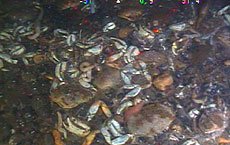
This week researchers studied a once-beautiful reef in the Oregon "dead zone" and found a wasteland. With oxygen levels near zero, fish had fled and the reef was littered with thousands of dead crabs.

This is unprecedented in 40 years of monitoring and "not normal" according to biologists.

Stay tuned, this requires watching. Suggested links to global warming are not proven but very scary.

Tuesday, August 01, 2006

Unusual Oregon dead zone spreads, worsens

..."it could never happen here"...

Oregon's dead zone is bigger and badder this year, probably trying to compete with its more famous cousins like the one in the Gulf of Mexico.

The Oregon dead zone is now recognized as probably caused by people, despite learned opinion from a few years ago that it was a natural phenomenon.

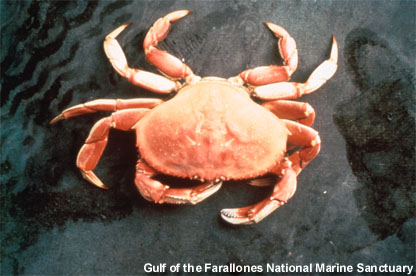
Low oxygen water has crept into shallow waters this year, and the darn thing is spreading up the Washington coast. Crab fishermen have found dead crabs in their traps, and dead fish have floated up onto beaches.

If you've never seen the Oregon coast, this is not where you expect a dead zone. Rough and sometimes craggy, with open beaches and not a lot of shallow water, the ocean off Oregon is swept by fairly strong currents and whipped by waves even in the summer. The water is usually cold and few people live on the coast. Overall, this is not a typical recipe for a dead zone (more typical = shallow, enclosed areas with lots of nutrient runoff and fairly immobile water where plankton blooms can cook up, sizzle, and then rot into a stinky deadened broth).

Nobody would have believed it if told a decade ago that a human-caused dead zone would be wreaking havoc off the Oregon coast. It just ain't how Oregonians think about the wild coast. Thunder and tarnation.


BTW, for the record, the dead zones are called that not because everything dies. Some wicked slimy things thrive in so-called "dead zones," and what dies is just all the nice things that people like to eat.

Thursday, July 27, 2006

Dead zone big this year in Gulf of Mexico

Heavy spring rains mean the dead zone in the Gulf of Mexico will be bigger than average this year.

Once again, nutrient pollution from upstream areas will accumulate and fester in the Gulf of Mexico, making ocean waters toxic to most ocean life.

The Dead Zone is an interactive site with more info and some interesting effects.

NOAA's dead zone news shows this year's prediction and other useful information.

The Dead Zone may give you the diversion you need to cope with the recent spate of bad news.

Tuesday, May 30, 2006

Iowa-the place where red snapper die?

Iowa—the place where red snapper die?

The Gulf of Mexico dead zone doesn’t just happen in the ocean, it starts upstream where people are careless with their use of the land. In places like Iowa, 35,000 feet straight below Alaska Airlines flight 2.

This is the place where nitrogen leaked, that fed the plankton, that fueled the bloom, that died and decayed, that sucked up the oxygen, that killed the red snapper, that ruined the Gulf of Mexico.

Far below, a grid of one mile sections as far as the eye can see. Water from farmlands, heading south to the Gulf of Mexico. Is somebody down there getting careless and spilling nitrogen into the Gulf of Mexico? Is it Iowa? Or is it everyone? Is it simply the consequences of modern agriculture? Would we have to go back to the stone age to have a healthy ocean?

This brings to mind the lesson of Hank Bosma, a dairy farmer from the Yakima Valley, Washington who used to have a serious pollution habit. I got involved when Charlie Tebbutt with the Western Environmental Law Center asked me to look at some water quality monitoring data from the Yakima Valley, Washington state. Charlie asked whether monitoring data was likely to show what his clients believed, that a few bad dairymen were responsible for much of the waste polluting area streams. I told Charlie that I thought it was unlikely that monitoring data would implicate one or a few farmers. Boy was I wrong.

To make a long story short…most of the dairies were clean, and Bosma's dairy was very-very dirty. Monitoring the watershed every two weeks showed severe nitrogen plumes running downstream from Bosma's dairies.

A recent study says the same thing is true at a much larger scale, that a few locations in the Mississippi River basin are responsible for the great majority of the nitrogen that fuels the Gulf of Mexico dead zone. So there may be a solution, because it isn't everyone.

Flying from Washington to Washington (Seattle to DC), looking down at the Gulf of Mexico dead zone in Iowa, I don't think we have to go back to the stone age to have healthy red snapper in the Gulf of Mexico. We just need to learn to farm right, and fish right.

Friday, May 19, 2006

Muscular help for ocean dead zones

In a nasty twist of fate, blue mussels that were busy cleaning up Rhode Island's Narragansett Bay were killed by an expanding dead zone.

Dead zones are usually blamed on excess nutrients from fertilizers and livestock. But the "demand-side" is a neglected human impact that creates or worsens dead zones. Over-harvest of oysters and clams that eat plankton has reduced the ability of coastal waters to consume and limit the plankton blooms that create dead zones.

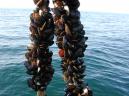
Scientists were studying a lucky mussel-building boom in summer 2002, that was a miniature version of the once-grand bivalve empire (mussels, clams & oysters). They noted the "muscular" cleaning effect of some impressive mussel reefs and the clear water that resulted. But, alas, it was too good to last. A plankton bloom overwhelmed the bay and created a massive smack-down of low oxygen that killed the mussels and many other animals that couldn't flee. The bay will probably take a decade to recover.

Maybe this is a cause for California's "mussel building" Governor, Arnold Schwarzenegger.