Showing posts with label ocean restoration. Show all posts

Tuesday, June 19, 2007

Oysters to the rescue

Puget Sound needs oysters like a car in Seattle needs windshield wipers. Once upon a time, oysters filled the Sound and filtered and cleaned the water.

Too bad we ate most of our oysters and killed the rest with water pollution. But wait, maybe it's not too late. The Nature Conservancy, the Puget Sound Restoration Fund, and volunteers are trying to restore our native Olympia oyster by building them new homes.

It's a great example of ocean restoration done right, because the new homes are nothing more than old oyster shells put back into the Sound. Baby oysters grow best on old oyster shells, making huge oyster reefs a normal part of a healthy bay.

The program will rely on natural reproduction to reseed the bays, so there are no worries of planting the wrong oysters from hatcheries. The Sound seems clean enough for oysters to thrive now, so it's worth a try.

Some people say the small native Olympia oysters taste better than the exotic imports now common in oyster farms. Maybe someday the world will know about Puget Sound's famous Olympia oysters.

Friday, June 01, 2007

New effort to restore Puget Sound, MudUp!

I attended a meeting last night where Kathy Fletcher of People for Puget Sound explained the new Puget Sound Partnership formed by our Governor and legislature.

And she mentioned an exciting new campaign that went live yesterday, MudUp Check it out, and get dirty for Puget Sound. You can do it even if you don't live here, we're going to need all the help we can get.

I'm optimistic that this new effort will actually learn from past mistakes and make good progress on the big issues facing us, like shoreline protection, non-point source runoff, sewage systems and leaky septic tanks, etc. Will it make headway on our transportation system? That's a real weak point for Seattle and the Puget Sound area, so we'll have to wait and see. Or...better yet...get active and help push that boulder uphill.

Thanks to Kathy, People for Puget Sound, Governor Gregoire, State Senator Rockefeller, and the countless others involved.

Wednesday, May 16, 2007

Protecting fish benefits corals


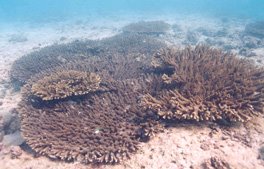
Corals benefit from no-fishing marine protected areas. Grazing fish such as large parrotfishes that thrive in the MPA remove algae and improve coral reproduction.

This is the first finding of benefits to coral reproduction from reduced algae cover in no-fishing MPAs, thanks to the helpful work of grazing fish. Not a big surprise, really, but proof is always necessary given the abundance and persistence of MPA critics.

Monday, April 23, 2007

How to save our ocean fish

The secret lies in that most American of values…shared investment in a better future. We need to pull together in this difficult time, but it’s tough when too many people are looking backwards and crying.

Remember the glorious rush of pulling together in a crisis? Whatever has been yours, I’m sure you’ve been there. Remember a hurricane that flooded streets and cut power? Maybe an earthquake, or a volcanic eruption that produced a snowfall of ash? How about that snowstorm that brought everything to a standstill and drew the whole neighborhood out into the silent streets to marvel at the magic of it all? Nothing pulls people together like rising together to meet a challenge.

Is that our response to our declining oceans? Not yet. We’re not getting busy with solutions, instead we’ve spent our precious time and energy locked into a struggle over what’s really happening and why, and hey don’t dare take away what’s mine.

We’ve got too many people looking backwards and crying about loss. It’s important to know what’s missing, yes, but that doesn’t guide us into the future. If you want to catalogue and remember, that’s good. But if you want to freeze a version of what used to be, that’s not helpful.

It's true that coral reefs are under siege, there are way too many problems. And things are likely to get worse. So what do we do? Moan about what’s going, going, gone? Rail uselessly against our messed-up system and the sad fact that our ocean doesn’t matter to most people? Or do we look for a glimmer of a better future?

What do we see looking back? Once upon a time, we had a glorious past. Fishermen were noble and strong, and they went down to the sea in boats to catch fish that were famously abundant. And everyone cheered. Why can’t we have that again? And once upon a time, fish swarmed around magnificent multi-colored coral reefs, and all you had to do was put your head underwater to see a fantastic ocean that looked like the pages of a book. Where can I go to see that now?

We can look backwards and yearn for the good old days, but that’s a posture of fear and resignation. Or, we can look forward into an uncertain future, and ask how best to have a say in what’s coming. The future belongs to those that embrace it. That is the most American of values.

Picture a sailing vessel at sea, battered by an unexpected squall. Shall we shrink from what lies ahead? Or sail on?

As blogfish moves into year 2, the future has never looked brighter. Why? Because that’s what the future is for.

Wednesday, March 28, 2007

Red snapper rebuilding begins

Finally, after decades of overfishing, red snapper are on the road to recovery in the Gulf of Mexico.

Today, the National Marine Fisheries Service issued long awaited management measures to help restore depleted red snapper populations in the Gulf of Mexico. These measures known as the ‘interim rule’ address two critical issues that have driven red snapper populations to dangerously low levels, overfishing and bycatch.

The interim rule sets responsible catch levels that will help reduce overfishing, reduces bycatch by up to 60 percent in the commercial fishery and locks in the bycatch reduction gains of 50 percent realized over the past two years from the reduced shrimping effort. The reduced shrimping effort is a result of recent active hurricane seasons and poor economic conditions in the fishery.

“We applaud the actions by the Fisheries Service to begin the process of truly ending the overfishing of red snapper and restoring this signature fish back to healthy levels,” said Chris Dorsett, Gulf of Mexico Fish Conservation Director with The Ocean Conservancy. “This interim rule is a major step in complying with a federal court ruling earlier this month finding the current red snapper rebuilding plan illegal and requiring federal regulators to produce an effective rebuilding plan by December 2007.”

Red snapper has been managed by state and federal regulators in the Gulf of Mexico since the 1980s. Red snapper was first identified by scientists as severely overfished in 1989, yet for almost two decades, federal managers failed to set catch levels based on the advice of its scientists and consistently allowed too many fish to be caught and killed as bycatch. As a result, the latest health assessment of red snapper conducted in 2005 showed the spawning population is now under three percent of its historic abundance.

Based on this assessment, the Gulf of Mexico Fishery Management Council, an advisory body to the National Marine Fisheries Service was tasked with adopting a new rebuilding plan for the 2007 fishing season. The Gulf Council ultimately failed to produce this plan. The National Marine Fisheries Service, the lead federal agency, was therefore forced by law to step in with this interim rule to save red snapper. “We are now looking to the Gulf Council to uphold its stewardship responsibility by crafting permanent management measures to restore red snapper back to healthy levels capable of supporting catch levels almost three times higher than current levels.”

The interim rule is effective for the 2007 fishing season, the Gulf Council is responsible for developing the management plan for the 2008 fishing season and beyond.

Monday, March 19, 2007

In motion for the ocean

An idea to throw on the table...is the ocean best saved by getting us moving in the right direction or by setting a goal and aiming for it?

Why does blogfish care? Much ado lately about
-what is sustainability?
-defining & measuring conservation success
-greenwashing among ocean users

Here's my idea, I think we have too little emphasis on getting ocean people moving in the right direction, and too much riding of high horses and telling others they're not sustainable enough. I doubt that I'm the only one that's tired of being hectored, lectured, and otherwise picked on for not being holy enough.

So...a proposal: maybe we could try to encourage people to do better this year than last, and better yet next year. If you're creating ocean impacts, try to reduce them, and then try again later to reduce them even more.

Or...the alternative: we could set a high threshold for ocean conservation success, and criticize everyone who doesn't get there right away.

Now which seems more likely to build an ocean conservation movement?

Tuesday, March 13, 2007

Red snapper lawsuit: judge orders rebuilding

In a major legal victory, the Ocean Conservancy and partners won a federal court order for a credible red snapper rebuilding plan within 9 months.

This lawsuit followed decades of failure as managers refused to end overfishing and kept putting off the necessary task of rebuilding this severely depleted fish. Conservation advocates have been beating their heads against a wall and finally filed this lawsuit in 2005 after managers once again delayed rebuilding efforts.

Red snapper would be rebuilt by now if modest fishing cutbacks had been implemented in the late 1980s, when problems first became apparent. But now the pain will be much more severe. It didn't have to happen this way.

Stay tuned as managers begin the difficult task of rebuilding. Let's all help invest in rebuilding by supporting those doing the hard work.

Wednesday, February 21, 2007

10 commandments for saving fish

Thou shalt not deplete the fishes of the ocean. Sounds good, especially with thunderbolts for violators. But since the recently released "10 commandments" for saving fish came from scientists thay have a decidedly astringent flavor.

Like: "keep a perspective that is holistic, precautionary and adaptive." OK, that's good stuff but who's going to belly up to the bar for another shot of advice after finding that in their glass?

Well, anyone who made it this far may as well read the original g(r)eek version of the hard-to-swallow "10 commandments for ecosystem-based fisheries science" Or...try my 10 commandments for saving the fishes of the sea.

That's right, blogfish wishes to help, so I've translated them here (somewhat loosely):

1. Seek not narrow advantage--think big, learn and be careful.
2. Don't worship old ideas.
3. Respect the old fish for they breed most effectively.
4. All the fishes of a species are important, even the most humble.
5. Harm not the homes of fishes.
6. Let some fishes live for the pestilence is surely coming.
7. Let the lionfish lay down with the lambfish, for they need each other.
8. Seasons change.
9. The largest of the fishes may be gone forever.
10. There are no fishes untouched by people.
Now...armed with this great wisdom...go forth and do good. Namaste.

Tuesday, February 06, 2007

Chesapeake cleanup dead in the water

The Chesapeake Bay cleanup has foundered on the shoal of good intentions. Bold promises were made, but it's not happening.

What's wrong? Lack of political will, an unwillingness to change...basically people don't care enough to do the job right.

This is a sad story for a clean up effort that was supposed to be a national model and an inspiration to those of us hoping to see improvements in Puget Sound.

Is there still hope for the Chesapeake? Yes, so long as there are brave activists and watermen left alive. Read about the bay and become a supporter of restoration, because what we do to the bay we do to ourselves.

Tuesday, December 12, 2006

Predator extermination in the ocean?

We're about to go after a new ocean villian, the cownose ray. These shy creatures have an unfortunate fondness for oysters, and we humans can't stand the competition.

Now that we've dredged, polluted, and otherwise plundered oyster reefs, we are targeting a natural predator that has no guilt in the decline of oysters. Why? Because cownose rays had the audacity to eat our "restoration" projects. Apparently, we're the only ones allowed to exterminate oysters.

Naturally, baby oysters tend to settle on shell mounds, and the rays can't touch that. But restoration projects have sprinkled naked baby oysters into the Chesapeake Bay, and rays simply did what came naturally, munching them up. Fishery managers have responded with an urgent call to find markets for cownose rays, so we can make money while getting rid of this "pest." Cownose ray medallions anyone?

Haven't we learned our lesson from previous attempts to exterminate predators? The results aren't always the simple expectation of kill predators and get more prey. Cascading ecosystem effects can produce surprising results, such as wolf reintroduction producing better streamside habitats. Who knows what surprise will pop up if we eliminate cownose rays?

Friday, November 17, 2006

Can we restore coastal oceans?

Guess which of Seattle's two coasts is clean--the urban lake or the ocean? Despite massive hurdles, we have perhaps the cleanest urban lake in the world. Now it's time to fix Puget Sound.

Past restoration has built local pride in sparkling Lake Washington, so we have a model of what's needed. Read about how science and public action combined to restore Lake Washington, as told by the late UW Professor W.T. Edmondson in "The Uses of Ecology." It's a fascinating and inspring story.

Lake Washington was not an easy fix. The water in Lake Washington has a residence time of 2.3 years. Puget Sound should be easier, tidal flushing means the residence time for water in Puget Sound is only a few days to a few months (depending on location).

Can we show the world how to restore coastal oceans? We're making a start. The Governor is pushing Puget Sound cleanup, the state has a budget surplus, and the EPA has pledged to help. We've seen fines for oil spills and dumping cruise ship waste. Let's show the world how it's done!

Check with People for Puget Sound for updates...

Friday, September 01, 2006

Signs of coral reef recovery?

Arabian Gulf corals are recovering from climate-caused damage. Studies suggest recovery could be complete within 10 years, if all goes well.

This is good news for corals and ocean health, and we sure need some good news these days.

Thursday, June 29, 2006

Fish thriving in Tortugas reserve

Five years after fishing was ended, fish are thriving in Florida's Tortugas marine reserve.

Scientists have found more fish and larger fish in the areas where no fishing is allowed. No great surprise, really, it's simple common sense.

But it's far from simple to get some areas closed to fishing. Some fishermen fight vigorously against all attempts to create marine reserves where no fishing is allowed.

I'm a fisherman and I accept the idea that some areas should be set aside for fish and not for fishermen. I wonder how many fishermen would accept closure of some areas where fish can thrive in the absence of fishing?

Monday, May 29, 2006

Restoration turns into oyster bar for fish

Cownose rays were unwelcome guests at an oyster restoration project in the Chesapeake Bay, eating most of the project.

Most of the 775,000 oysters were gone just a few days after they were planted in the Piankatank River near Stingray Point.

The planted oysters were eaten before they had a chance to hide in the oyster shell reefs made just for them, probably because warm water brought the rays in earlier than usual. This isn't the first time that rays have made a feast off of oyster restoration projects, maybe they're learning the routine.

Friday, May 19, 2006

Muscular help for ocean dead zones

In a nasty twist of fate, blue mussels that were busy cleaning up Rhode Island's Narragansett Bay were killed by an expanding dead zone.

Dead zones are usually blamed on excess nutrients from fertilizers and livestock. But the "demand-side" is a neglected human impact that creates or worsens dead zones. Over-harvest of oysters and clams that eat plankton has reduced the ability of coastal waters to consume and limit the plankton blooms that create dead zones.

Scientists were studying a lucky mussel-building boom in summer 2002, that was a miniature version of the once-grand bivalve empire (mussels, clams & oysters). They noted the "muscular" cleaning effect of some impressive mussel reefs and the clear water that resulted. But, alas, it was too good to last. A plankton bloom overwhelmed the bay and created a massive smack-down of low oxygen that killed the mussels and many other animals that couldn't flee. The bay will probably take a decade to recover.

Maybe this is a cause for California's "mussel building" Governor, Arnold Schwarzenegger.

Sunday, April 23, 2006

Coral reef thrives with no fishing

Scientists report that a no-fishing area is good for corals.

The corals thrive because more large parrotfish live in the no fishing area, and they eat algae that would otherwise overgrow corals.

Big surprise, who would've believed that ocean ecosystems are healthier when humans don't take out a lot of fish?